Wednesday, October 2, 2013

The Chronicles of Dragon: The Hero, The Sword and the Dragons


          The Chronicles of Dragon - The Hero, The Sword and The Dragons, was written by Craig Halloran. This book is about a young boy by the name of Nath whose only wish in life is to become a dragon. He is responsible for protecting the dragons; however, his attitude is not always where it needs to be getting him into trouble. Nath has to find his own way to Orcen Hold where the true test lies on whether or not he has what it takes to become a dragon. This book would fall under the science fiction/fantasy genre; for the reasons, that it incorporates extending physical laws,  and it is imaginative. The only illustration the books has is on the cover, which displays a very imaginative dragon. The illustrator spikes the readers interest by including such a fierce looking dragon on the cover.
         
         A couple of motivational activities I would incorporate in my classroom is the expansion of one's imagination. First I would have my students draw a picture of what they believe the transformation from a boy to a dragon would be. Secondly, I would have my students get into small groups and chose a chapter that they would want to create a short skit depicting the events from that chapter.
 
         Author Craig Halloran served time in the military and is a husband and father. He creates books that will keep the reader engaged using action and exciting characters. This specific book was written for and dedicated to his son. He creates books for intermediate level readers. Other works from Craig Halloran include:
  •  The Chronicles of Dragon: Dragon Bones and Tombstones
  • The Chronicles of Dragon: Terror at the Temple
  • Zombie Day Care
  • Zombie Rehab
References
 
Halloran, Craig. (2012). The Chronicles of Dragon - The Hero, The Sword and The Dragons. Two-Ten Books Press.  
 
Galda, C. &. (2011). Literature and the Child Seventh Edition . Belmont: Wadsworth Publishing . 

Stone Soup


         Stone Soup, written by Miranda Paul and illustrated by Antara Majumder is a short story about a traveler that stumbles in to a small town that needs to learn the value of sharing. In the beginning the traveler convinces the town that he has a magic stone that can make amazing soup. The townspeople go with idea that his stone is magical; however, whenever he makes a suggestion to improve the soup each individual in the town is willing to help. For example, he made a comment that chicken would make the soup taste better, so one of the townsmen ran home to get some chicken. By the end of the story everyone contributed to the soup and realized that sharing goes a long way.

         The book, Stone Soup would be classified in the folklore genre. This specific book represents values and beliefs of individuals from years ago. The value of sharing and caring for thy neighbor are extremely important. The illustrator does an a amazing job of incorporating authentic cultural illustrations. Her illustrations also complement the narrator.


         This book can be very useful in the beginning of the school year when teaches students about sharing and caring for each other. After reading the story I would ask my students the following questions:
  • What does the word value mean to you?
  • What value did you learn from this book?
  • Give me an another example of how the townspeople could have helped one another?
         A motivational activity I would hold in my class is "A present for the main Character." The students would have to decipher who the main character is and create a special gift for him/her. I would then have them create a short paragraph explaining why they chose that specific gift. Another activity I would have my students do is create an alternative ending to the story. I would have the students brainstorm on different outcomes in small groups, then individually have them create their own alternate ending.
 
        I recalled reading this book as a child and remembered the value of sharing that it taught me. The author Miranda Paul is a mother of two, teacher and travels the world. She gets most of her inspiration from those things. She has gained influence from fellow authors Shel Silverstein and Lois Lowry. She has created other books like:
  • Water is Water
  • One Plastic Bag 
   References


Paul, Miranda. (2012). Stone Soup. Amazon Publishing.
 
Galda, C. &. (2011). Literature and the Child Seventh Edition . Belmont: Wadsworth Publishing . 


Tuesday, October 1, 2013

My Dinosaur is Scared of Vegetables


      My Dinosaur is Scared of Vegetables, was written by Lily Lexington. This children's book is about two friends that share the same fear....eating veggies. The two friends are sent to bed with no dinner because they refused to eat their vegetables. The following morning, Jack and his friend the dinosaur went down stairs for breakfast only to find their dinner there from last night. The boys again refused to eat and went to their baseball game. During the game Jack was very sluggish and tired and sadly didn't play very well. When the two got home, Jack's Mom explained to dinosaur the importance of eating healthy. He was no longer scared and finally ate his vegetables with Jack.


The genre this book would be classified in is poetry. Through out the entire story Lily Lexington is using rhythm and imaginative thoughts to keep the reader entertained. Lexington does an amazing job of relating to young readers and incorporates beautiful language in doing so.
In a classroom setting I would encourage students to think about things that may scare/frighten them. I would ask questions like:
  • What foods are you afraid to eat?
  • Do you think Jack and his friend dinosaur should have been afraid of eating vegetables?
  • What are some other foods that are healthy for you?
Another activity I would have my students do is learn about the food pyramid. I would bring in a couple items from each level of the pyramid and hold a discussion on which foods are best to eat. We would then sample the healthy snacks. I believe the kids would enjoy learning about what foods are healthy; as well as, tasting them too.

I really found this book to be educational and an easy read for younger readers. The rhyming that the author incorporates in the book makes it very enjoyable to read. It also holds a good lesson in the benefits of eating healthy.

References
 
Galda, C. &. (2011). Literature and the Child Seventh Edition . Belmont: Wadsworth Publishing . 
 
Lexington, Lily. (2012). My Dinosaur is Scared of Vegetables. Lexington Publishing.


Sunday, September 15, 2013

Tiger and Mouse: The Gift of Helping Others


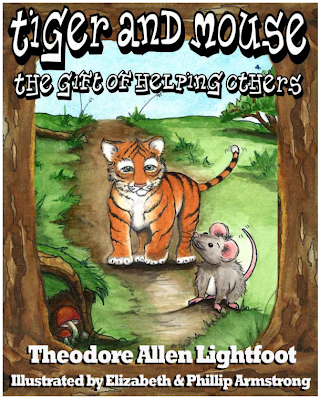
 Tiger and Mouse: The Gift of Helping Others is was written by Theodore Allen Lightfoot and illustrated by Elizabeth and Phillip Armstrong. I automatically fell in love with this children's book because of the lesson it can teach its reader. This book is about a young mouse that has to help his mother by finding food for his family and receives a helping hand from his friend, Tiger. This book would be classified in the fantasy genre because its literature and characters are based on events that could not happen in real life. For example, the tiger and the mouse talking to each other.


     This book teaches its readers to help one another and not expect something in return. A motivational activity that was suggested in the book that I think is a great idea is to have my class bring in canned goods to donate to a local food bank. This will teach my students the joy of doing a good deed. Another activity I could do is have my class come up with a list of helpful things that they can do to help someone in need. After reading this book with my class I have them answer questions like:
      1. What is one helpful thing you can do at home?
      2. Do you think Tiger was helping Mouse to get something in return?
     
   One of my favorite parts in the book was when the Mouse family stepped outside to see all the food Tiger had brought them. They were so excited and were ready to dive in; however, Mother Mouse made sure to remind them to give thanks before they ate.


     Theodore Lightfoot gains most of his inspiration to write from his two children. He has created other books that have Mouse and Tiger as the main characters. A few similar books to Tiger and Mouse are :
        The Bee Bully by: Angela Muse
        The Fox and the Grapes by: Roberto Piumini
        Monkey and Croc by: Will Terry
 
References
 
Galda, C. &. (2011). Literature and the Child Seventh Edition . Belmont: Wadsworth Publishing .
 
Lightfoot, T.A. (2011). Tiger and Mouse The Gift of Helping Others. Lightfoot Books


Sunday, September 8, 2013

I Love the Skin I'm In!


             I Love the Skin I'm In written by Mayma Raphael and illustrated by Hailey Cryan is an eye opening read for any young reader. I Love the Skin I'm In is about a little girl named Ruby who is curious as to why her skin color is different. Throughout the story Ruby asks her mom questions like, "Mommy, whys is my skin brown?" Ruby's mom educates her and expresses to her that her skin color makes her unique. Her mother also explains to her that her skin color can tell her a lot about her family and ancestors.

 
          The illustrator does an amazing job incorporating visual appeal to the reader; as well as, the way he portrayed the children. The genre, I Love the Skin I'm In is contemporary realistic fiction. This genre fits this book best because the story line is based on realistic events; as well as, holds a well-defined conflict. The questions Ruby asks her mom throughout the story are questions that I'm sure many children ask their parents. Ruby's mom did an excellent job of answering Ruby's questions. Ruby was filled with confidence in knowing that her beautiful skin can take her wherever she wanted to go.


      There are a few motivational activities that I would incorporate in my classroom after reading I Love the Skin I'm In. For example, in the story there is a discussion about how your skin color can tell you a lot about where you are from and about your ancestors. I would have my students create a family tree. This would teach my students about the history of their family; as well as, the history and culture of their friends ancestors. Two response questions for this assignment would be:
                      
  • Where are your ancestors from?
  •  What did your ancestors do for fun?  
Another class activity I would do is discus with my students what they want to be when they
 grow up. I would have them create a list of professions  and what is needed in order to have that profession. For example, if they wanted to be a firefighter I would ask them what tools would be needed in order to be a good firefighter.
 
 
For another activity I would use one of the examples from the book. I would bring in bags of different colored apples; however, I would peel them so the students couldn't "see" the difference between a green apple or a red apple. I would place the different colored apples in separate bowls and allow the children to taste them. I would then ask these response questions:
  • Does bowl one look different than bowl two?
  • Is there a difference in taste from bowl one and two?
I believe I Love the Skin I'm In educates readers on the importance of multicultural diversity. It teaches readers that skin color has nothing to do with what is on the inside. I believe this book incorporates Saint Leo's Core Value of Respect in regards to expressing the strength in cultural diversity; as well as, having respect for individual uniqueness.

Mayma Raphael got inspiration from her children to write I Love the Skin I'm In. Originally from the Dominica Mayma now resides as a stay at home mom in New York. One similar book to I Love the Skin I'm In is Shades of People written by Shelley Rotner.
 
                                              References

 
Galda, C. &. (2011). Literature and the Child Seventh Edition . Belmont: Wadsworth Publishing .

Raphael, M. (2012). I Love the Skin I'm In! Yorkstown Heights: Mom Publishing .